Product Design
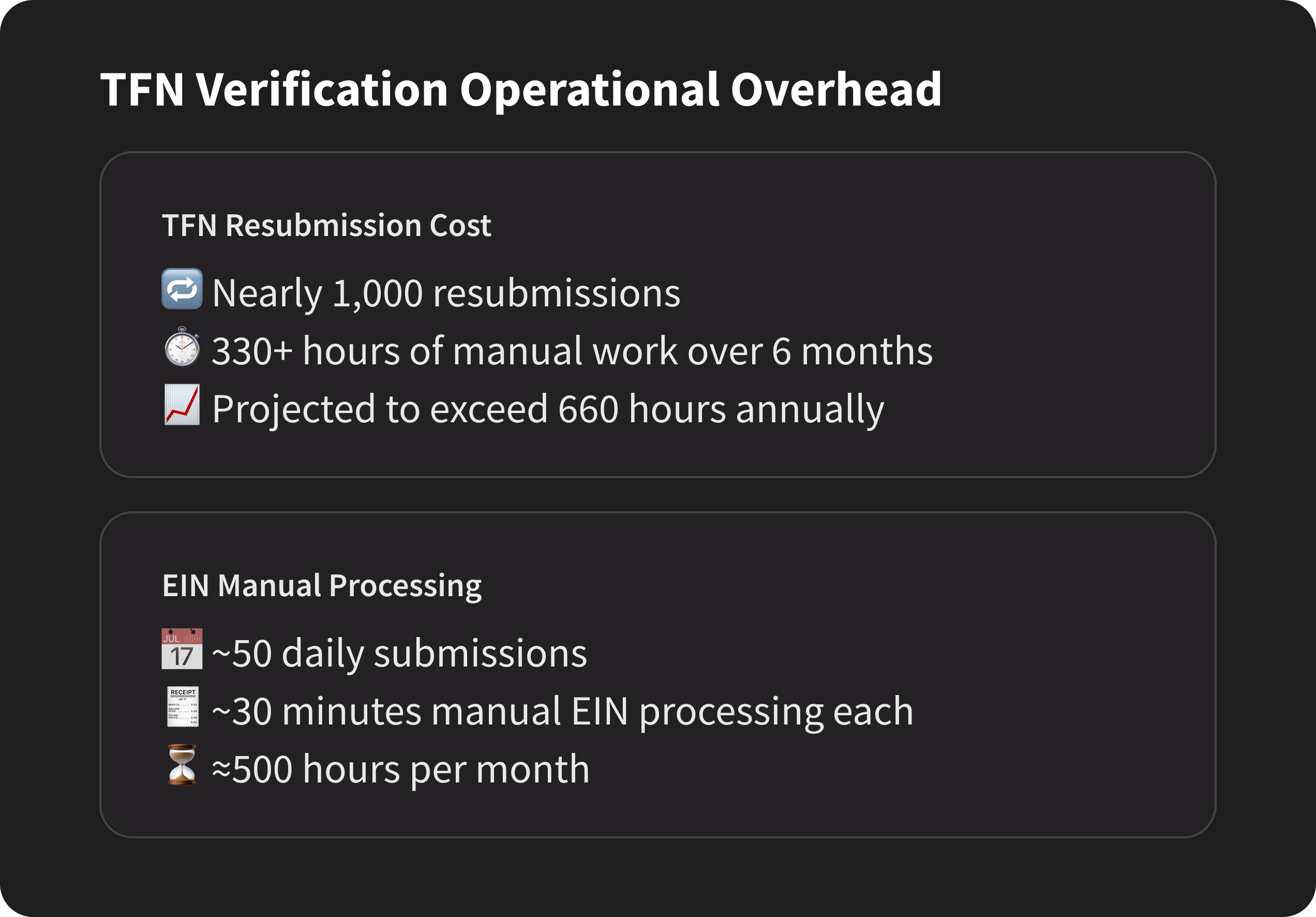
The core business problem was resubmission, so I focused on prevention. I partnered with Compliance, Product, and Engineering to understand why TFN requests failed and designed solutions that directly addressed those failure points. The most common issue was incorrect addresses because we were fetching address data from Shopify, assuming it was the correct legal address for TFN purposes.
1. Prevention and Setting Clear Expectations
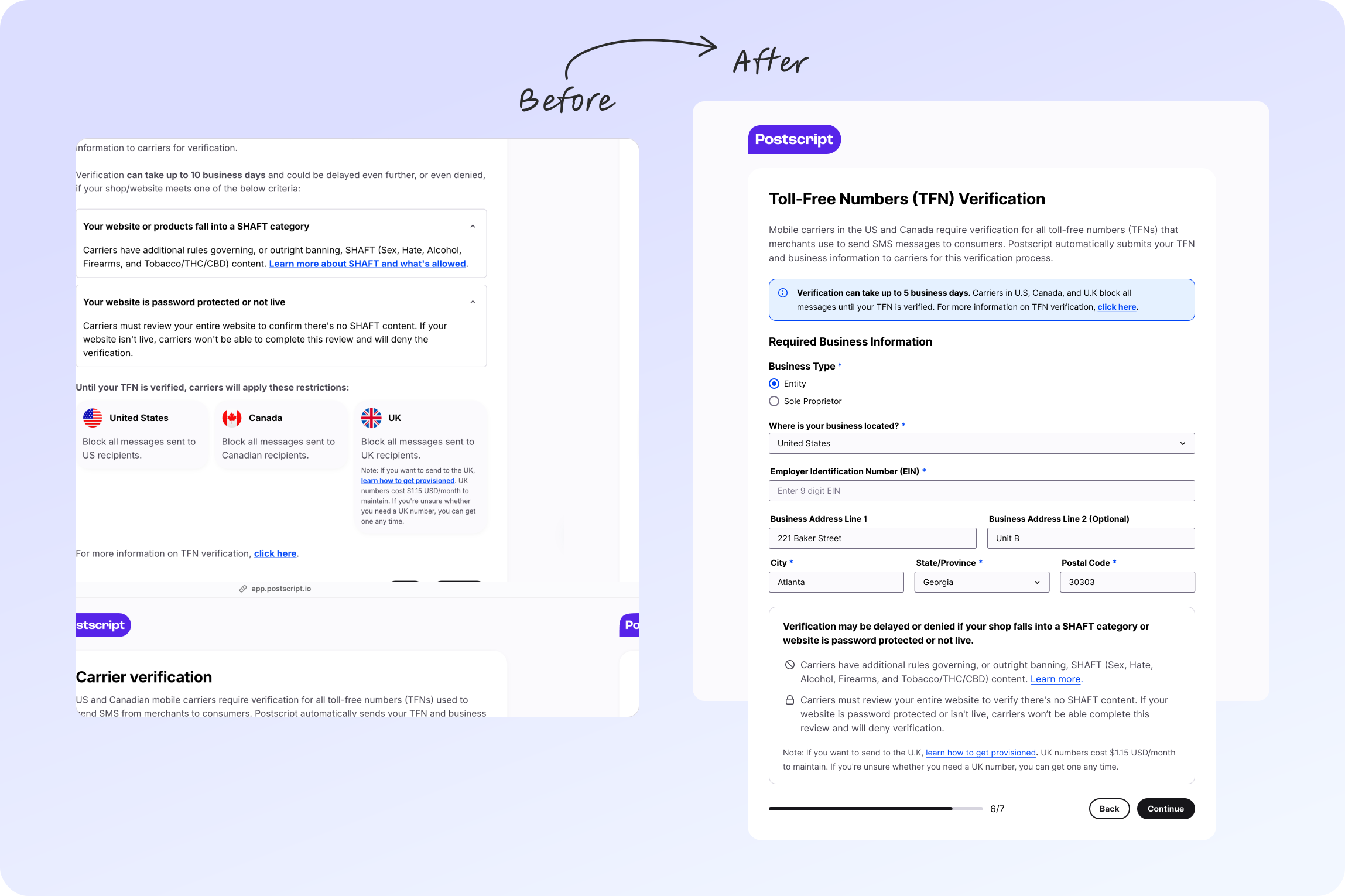
I redesigned the TFN verification flow to collect the right information upfront, introducing clearer business registration inputs that supported EINs, international identifiers, and a dedicated path for sole proprietors without EINs (avoiding SSN collection). I reworked the information hierarchy and content to clearly explain what TFN verification is and how long it typically takes.

New TFN step during onboarding
2. Contextual Alerts Where It Matters
TFN verification directly impacts access to core features, so I extended the experience beyond onboarding. I added contextual alerts across popups, campaigns, automations, and test message flows (critical moments for building trust) so merchants understand they're blocked, why, and what to do next. I also surfaced common failure reasons proactively, allowing merchants to identify and fix issues before resubmitting. This reduces unnecessary delays and frustration.
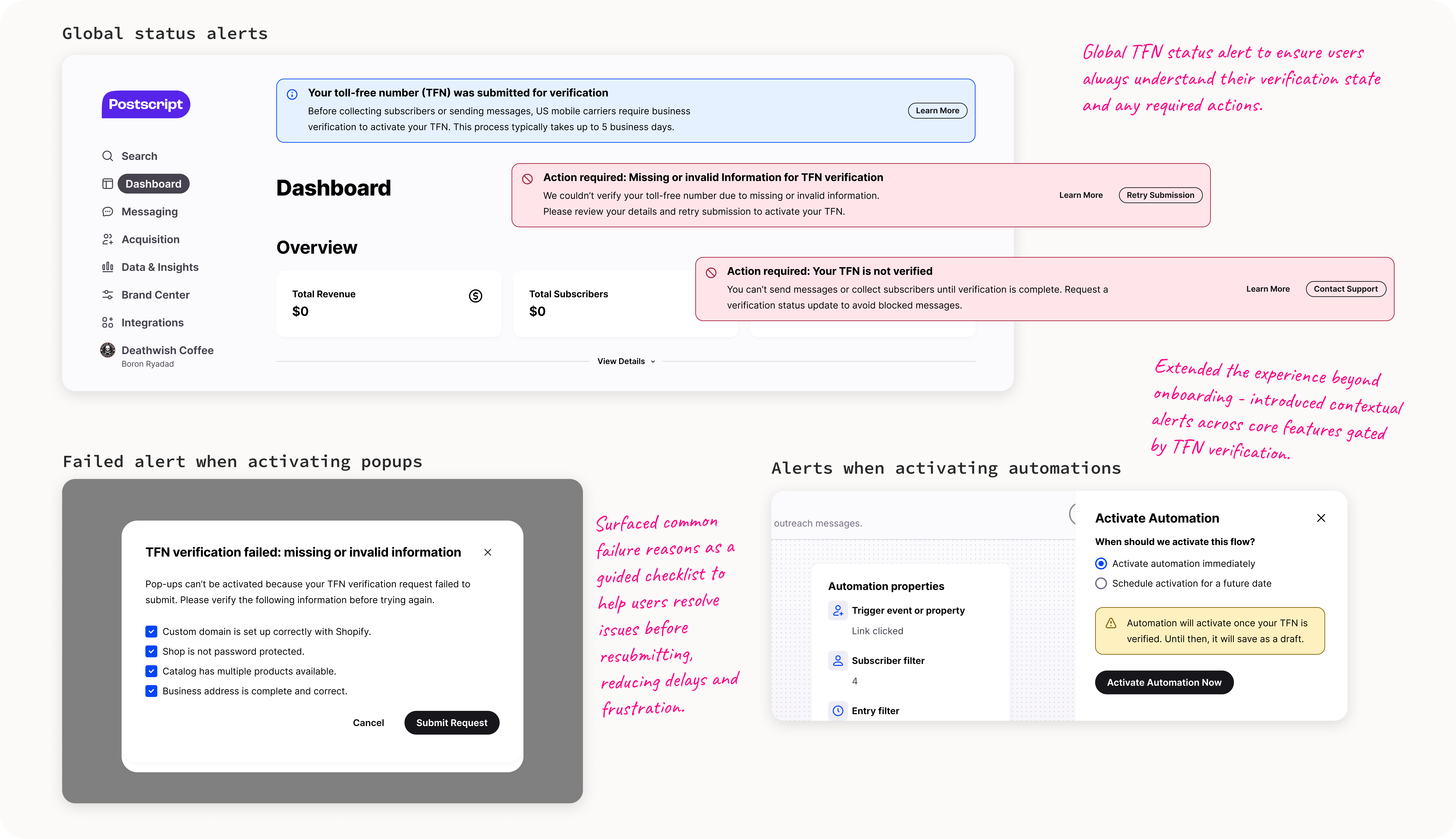
Various points where TFN status and action is surfaced
3. Meeting Users Where They Are
I strongly advocated for sending email notifications when TFN verification succeeded or failed. When successful, this creates an opportunity for users to continue onboarding by activating automations, sending campaigns, and enabling popups. When it fails, users can address issues immediately and prevent future delays. I pushed for this to ensure we met users where they were during a critical trust-building phase early in onboarding.

TFN success and failure emails